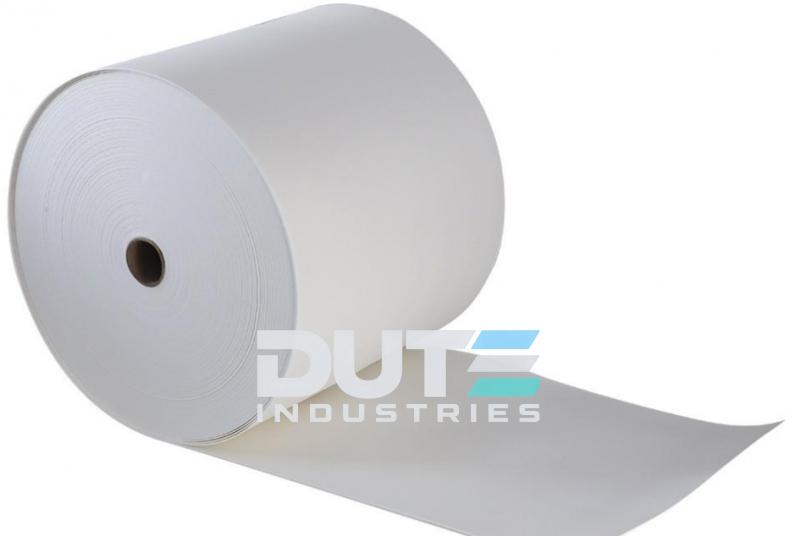

Discover IXPE foam properties, electron beam crosslinking technology, IXPE vs XPE differences, and industrial applications. Explore DUTE foam solutions.
IXPE Foam: Properties, Manufacturing Process, Benefits and Industrial Applications
IXPE foam, also known as irradiation crosslinked polyethylene foam, is a lightweight, closed-cell foam material widely used in automotive, electronics, construction, packaging, and industrial applications.
Compared with conventional non-crosslinked polyethylene foam, IXPE foam offers a crosslinked polymer structure, fine cellular morphology, good dimensional stability, and excellent cushioning characteristics.
At DUTE INDUSTRIES GROUP, we supply polyethylene foam materials for a wide range of industrial applications, helping customers select suitable foam solutions based on density, thickness, compression performance, and processing requirements.
In this article, we explore how IXPE foam is manufactured, its key properties, the differences between IXPE and XPE foam, and its most common industrial applications.
1. What Is IXPE Foam?
IXPE stands for Irradiation Crosslinked Polyethylene Foam.
It is a closed-cell polyethylene foam produced using an irradiation crosslinking process, typically involving electron beam technology.
During manufacturing, high-energy irradiation creates crosslinks between polyethylene molecular chains. This crosslinked structure helps improve the material's thermal and dimensional stability and supports the formation of a fine cellular structure during foaming.
IXPE foam is commonly supplied in sheets or rolls and can be processed into various shapes through die-cutting, lamination, adhesive backing, and other converting methods.
Its combination of lightweight construction, flexibility, cushioning, and low water absorption makes it suitable for numerous industrial applications.
2. How Is IXPE Foam Manufactured?
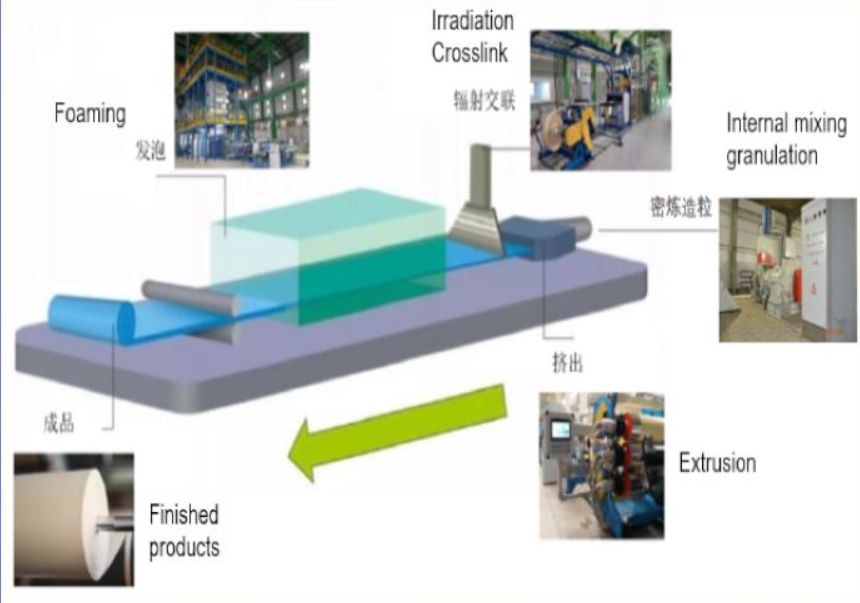
The production of IXPE foam involves several important stages.
Step 1: Raw Material Preparation
Polyethylene resin is blended with selected additives, which may include foaming agents, processing aids, and other formulation components.
The formulation is adjusted according to the required foam density, thickness, flexibility, and performance characteristics.
Step 2: Sheet Extrusion
The prepared material is extruded into a continuous sheet.
Precise control of sheet thickness and uniformity is important for achieving consistent performance during subsequent processing.
Step 3: Electron Beam Irradiation
The extruded sheet passes through an electron beam irradiation system.
High-energy electrons initiate crosslinking reactions within the polyethylene molecular structure.
This process creates a three-dimensional polymer network without relying on chemical peroxide crosslinking agents as the primary crosslinking method.
Step 4: Thermal Foaming
The irradiated sheet is heated under controlled conditions.
The foaming agent generates gas, expanding the material into a closed-cell foam structure.
The crosslinked polymer network helps stabilize the expanding cells and maintain foam integrity.
Step 5: Cooling and Finishing
After foaming, the material is cooled, inspected, and converted into the required dimensions.
Depending on customer requirements, IXPE foam may undergo additional processing, including slitting, die-cutting, lamination, or adhesive coating.
3. Key Properties and Advantages of IXPE Foam
Fine and Uniform Cell Structure
IXPE foam can be manufactured with a fine, relatively uniform closed-cell structure.
This characteristic supports consistent surface appearance, cushioning behavior, and performance in precision converting applications.
Lightweight and Flexible
The low-density cellular structure makes IXPE foam lightweight while maintaining flexibility.
It is particularly useful in applications where weight reduction and cushioning are important.
Low Water Absorption
The closed-cell structure limits water penetration compared with typical open-cell foam materials.
This makes IXPE suitable for selected moisture-resistant cushioning, insulation, and protective applications.
However, IXPE foam should not automatically be considered a complete waterproof sealing system.
Good Thermal Insulation
The gas-filled cellular structure reduces heat transfer through the material.
IXPE foam can therefore serve as an auxiliary thermal insulation layer in HVAC, automotive, flooring, and industrial applications.
Actual thermal insulation performance depends on foam density, thickness, temperature, and product formulation.
Cushioning and Shock Absorption
IXPE foam helps distribute contact pressure and absorb part of the energy generated by mechanical impacts.
This makes it useful for protective pads, component spacers, cushioning layers, and selected packaging applications.
Suitable for Precision Converting
IXPE foam can be processed through:
Die-cutting
Slitting
Lamination
Adhesive backing
Sheet and roll converting
Custom gasket and spacer fabrication
These processing options make IXPE foam suitable for industrial customers requiring customized foam components.
4. IXPE Foam vs. XPE Foam: What Is the Difference?
IXPE and XPE are both crosslinked polyethylene foam materials.
Their main distinction lies in the crosslinking technology.
IXPE Foam — Irradiation Crosslinked Polyethylene Foam
IXPE foam uses irradiation, commonly electron beam technology, to create molecular crosslinks.
It is often selected for applications requiring fine cell structure, thin foam sheets, consistent appearance, and precision converting.
XPE Foam — Chemically Crosslinked Polyethylene Foam
XPE foam typically uses chemical crosslinking agents during the manufacturing process.
It is commonly used in insulation, cushioning, automotive components, construction materials, and various industrial applications.
IXPE vs. XPE Comparison
| Property | IXPE Foam | XPE Foam |
|---|---|---|
| Crosslinking method | Electron beam irradiation | Chemical crosslinking |
| Cell structure | Often fine and uniform | Varies with formulation and processing |
| Surface appearance | Often suitable for precision applications | Depends on grade and production process |
| Flexibility | Grade-dependent | Grade-dependent |
| Thermal insulation | Good, depending on grade | Good, depending on grade |
| Cushioning performance | Good, depending on density | Good, depending on density |
| Typical applications | Electronics, automotive, flooring, precision cushioning | HVAC, construction, automotive, packaging |
Neither material is universally superior.
The correct selection depends on density, thickness, compression characteristics, temperature requirements, cost, and the intended application.
5. Main Industrial Applications of IXPE Foam
Automotive Interior and Cushioning
IXPE foam can be used in selected automotive interior applications, including:
Interior trim backing
Dashboard and panel cushioning
Floor and trunk underlays
Component spacers
Anti-rattle and vibration isolation pads
Its lightweight structure and converting flexibility make it useful for certain automotive cushioning components.
For automotive applications, customers should verify the required temperature resistance, flammability, odor, VOC, and durability specifications.
Electronics and 3C Products
IXPE foam is suitable for selected electronic equipment cushioning and protective applications.
Examples include:
Display module cushioning
Electronic enclosure spacers
Component separation pads
Precision die-cut foam inserts
Internal cushioning and protective layers
Standard IXPE foam should not be described as inherently ESD-safe, electrically conductive, or suitable for electromagnetic shielding.
Such functions require specially formulated and tested materials.
Flooring Underlayment
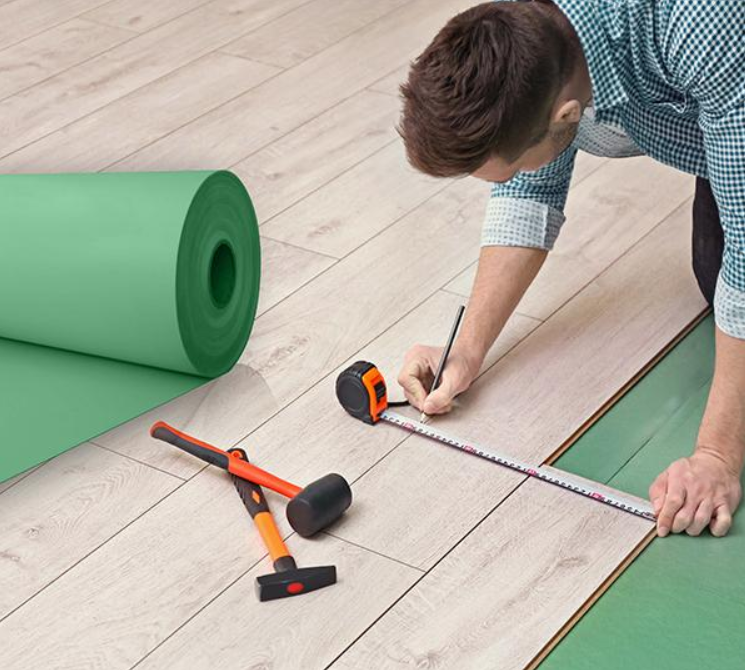
IXPE foam is widely considered for flooring underlayment applications.
It can provide cushioning, help accommodate minor substrate irregularities, and contribute to the reduction of impact sound transmission when incorporated into a suitable flooring system.
Common applications include:
Laminate flooring underlayment
Engineered wood flooring underlayment
Selected resilient flooring systems
Compression resistance, thickness stability, moisture performance, and acoustic results should be verified for the intended flooring system.
Packaging and Protective Cushioning
IXPE foam can be converted into protective sheets, pads, and custom-cut components.
Typical applications include:
Precision component packaging
Protective foam spacers
Surface separation layers
Reusable packaging inserts
Lightweight shock-absorbing pads
Its closed-cell structure and converting capabilities make it useful for packaging applications requiring consistent dimensions and cushioning performance.
HVAC and Thermal Insulation
IXPE foam may be used in selected thermal insulation and cushioning applications.
Examples include auxiliary insulation layers, equipment padding, and thermal separation components.
For refrigeration and condensation-control applications, thermal conductivity, water vapor resistance, operating temperature, and installation design must be evaluated.
Industrial Equipment Protection
IXPE foam can also be used for:
Equipment cushioning pads
Protective spacers
Light-duty vibration isolation
Surface protection layers
Die-cut industrial components
The material can be customized to meet different industrial converting requirements.
6. How to Choose the Right IXPE Foam
Selecting IXPE foam requires more than choosing a thickness.
Several important parameters should be considered.
Density
Foam density influences weight, stiffness, cushioning behavior, and compression performance.
Thickness
The required thickness depends on available installation space, compression requirements, and the intended protective or insulation function.
Compression Performance
Compression stress, compression set, and long-term deformation are important for applications involving repeated or continuous loading.
Temperature Resistance
Operating temperature limits should be verified for each specific grade, particularly in automotive and industrial equipment applications.
Surface and Adhesive Requirements
Some applications require adhesive backing, lamination, or compatibility with additional substrates.
Regulatory and Testing Requirements
Depending on the application, customers may need specific flammability, environmental, electrical, acoustic, or mechanical test results.
The most appropriate IXPE foam should be selected based on verified technical data rather than generic material descriptions.
7. IXPE Foam Sheets, Rolls and Custom Converting
IXPE foam can be supplied in different forms to meet manufacturing requirements.
Common options include:
IXPE foam sheets
IXPE foam rolls
Custom-cut foam pads
Die-cut foam components
Adhesive-backed foam
Laminated foam structures
Available dimensions, densities, colors, and converting options depend on the specific product grade and production capability.
For industrial customers, consistent material quality and reliable processing performance are especially important.
8. Why Choose DUTE for IXPE Foam Solutions?
DUTE INDUSTRIES GROUP focuses on supplying industrial foam materials and customized material solutions for customers in different markets.
Our product portfolio includes IXPE, XPE, EVA, PE/EVA, EPDM, CR, PU, and other foam materials for a variety of applications.
We help customers evaluate suitable materials based on:
Application requirements
Foam density and thickness
Cushioning and compression characteristics
Thermal insulation requirements
Die-cutting and converting needs
Custom dimensions and supply requirements
Whether your project involves automotive components, electronic devices, flooring underlayment, or industrial protective materials, DUTE can help identify suitable foam options for further technical evaluation.
9. Frequently Asked Questions About IXPE Foam
What does IXPE stand for?
IXPE stands for Irradiation Crosslinked Polyethylene Foam, a closed-cell polyethylene foam manufactured using irradiation crosslinking technology.
Is IXPE foam waterproof?
IXPE foam generally has low water absorption due to its closed-cell structure. However, water resistance depends on the specific grade, and the foam itself does not guarantee waterproof performance in an assembled product.
Is IXPE foam better than XPE foam?
Not necessarily. IXPE may be preferred for fine-cell, thin-gauge, or precision converting applications, while XPE may be suitable for many general insulation and cushioning uses. The choice depends on technical and commercial requirements.
Can IXPE foam be used for sound insulation?
IXPE foam can contribute to impact sound isolation in suitable layered systems, such as flooring underlayment. It should not be assumed to provide high airborne sound insulation on its own.
Is IXPE foam suitable for electronics?
Yes, standard IXPE foam can be used for selected electronic component cushioning, spacing, and protection. Applications requiring ESD control or electrical performance need separately verified material grades.
Can IXPE foam be die-cut?
Yes. IXPE foam can be converted into custom shapes, gaskets, spacers, and cushioning pads using suitable die-cutting and converting equipment.
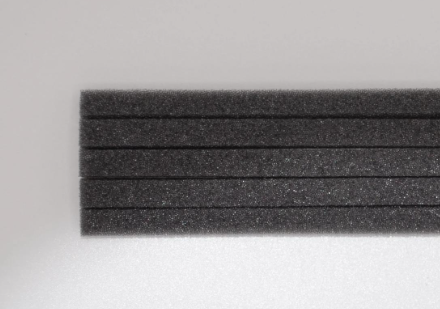
Looking for an IXPE foam supplier for your next project?
Contact DUTE INDUSTRIES GROUP to discuss your application, required density, thickness, dimensions, and processing needs.